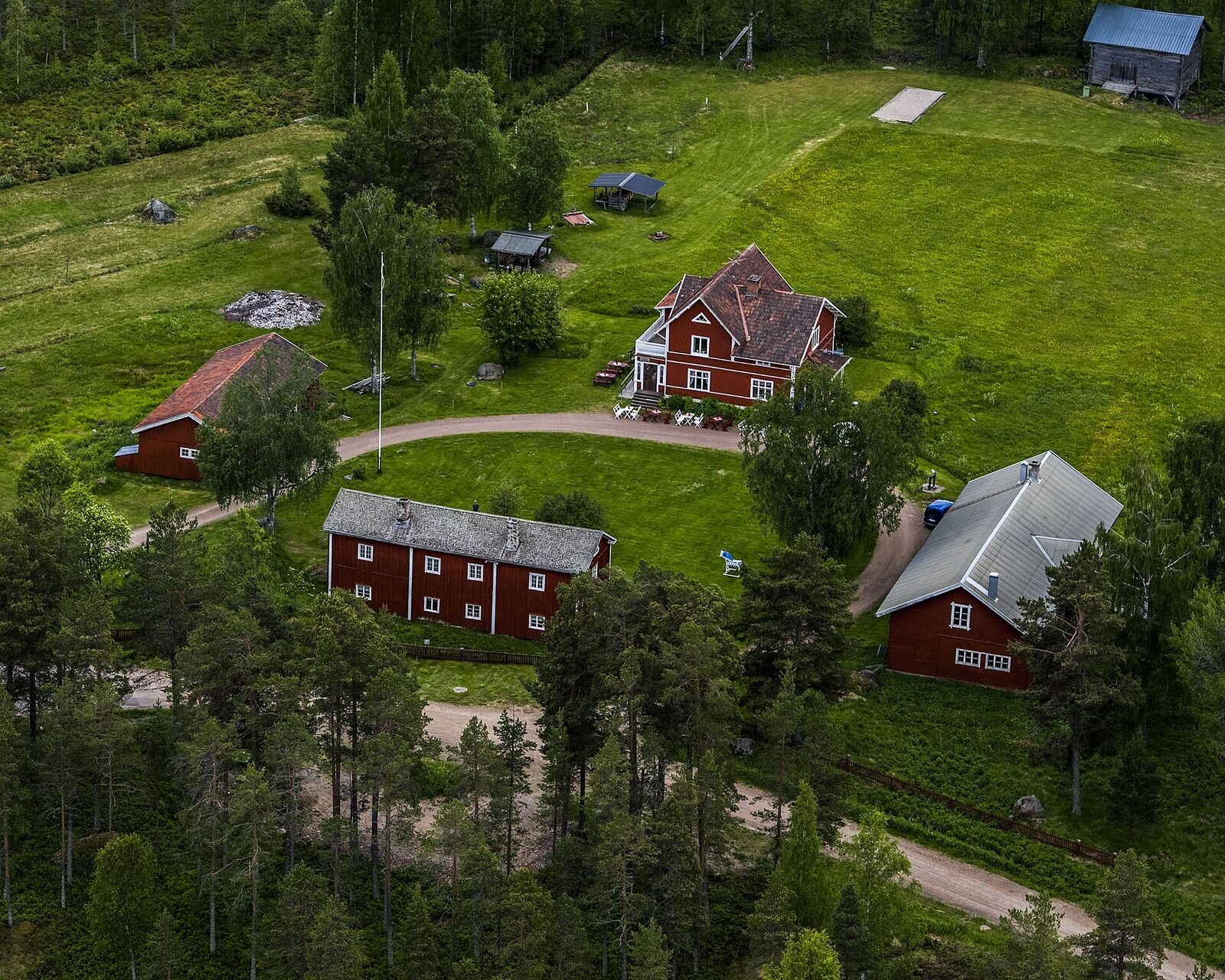

Before the settlers
People hunted and fished at Fågelsjön long before there was a village. Stone Age settlement sites lie at the mouth of the Gryssjöån on the southern shore, with old trapping pits in the forest nearby. The sites are now partly under water since the lake began to be regulated.
The Forest Finns arrive
In the early 1600s the Swedish crown encouraged Finnish farmers from Savonia to settle the uninhabited forests of central Sweden. They practised slash-and-burn agriculture: felling and burning spruce forest and sowing rye in the ash, which gave harvests where no Swedish farmer had tried to cultivate. They are known as the Forest Finns, and the area where they settled on the border between Dalarna and Hälsingland became Orsa Finnmark.
The oldest known settlement in Orsa Finnmark is Björkberg (Lehtomäki in Finnish), from 1618. From there, and from Tandsjö a few kilometres south of Fågelsjö, the families spread further into the forest as the burnt clearings were exhausted and the children needed land of their own.
The first settler
According to genealogical research, Fågelsjö's first permanent settler was Sigfrid Markusson (c. 1635–1705) of the Tossavainen family. His father and grandfather had come from Lievestuore in Savonia around 1608 and received a settler's charter from King Gustavus Adolphus in 1620. Around 1670 Sigfrid moved with his wife Anna Mårtensdotter and sons Mårten and Olof from Tandsjö to the shore of lake Fågelsjön. The county administrative board dates the first settlement to 1678 and further farms to the 1690s; the Bortom Åa farm is considered founded on its present site in 1679.
Finnish survived in the villages for a few generations before dying out; today it is mainly the place names that recall the language – Noppikoski, Korpimäki, Pilkalampinoppi, and islands in the lake with names like Mottikungen and Tirrikiv.
The gunsmiths
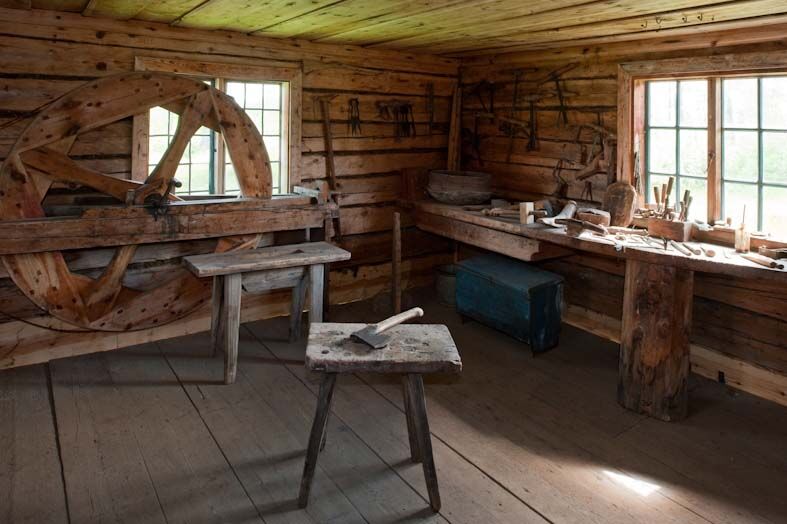

Slash-and-burn farming and cattle were not enough to live on in this harsh forest country. The people of Fågelsjö early on became craftsmen and traders, and the craft that made the village known was gunsmithing. During the 18th and 19th centuries muzzle-loading rifles were made here with barrels forged from bog iron, and they sold across much of northern Sweden. The Fågelsjö Finns also worked the salmon fishery in the Voxnan at Rullbo, halfway to Los – eighteenth-century court records tell of repeated disputes with the men of Våmhus, who held the rights.
In 1785 a gunsmith's forge was built at Bortom Åa that made the farm one of the wealthiest in the district. It still stands today, fully equipped – one of very few surviving peasant gun forges in Sweden. The village's most renowned smith was Halvar Andersson (1751–1838) at Stenbacken, and at Bortom Åa Jonas Olsson (1832–1895), smith and wealthy farmer, let the forge finance the farm's expansion. Jonas could read and write, kept diaries, and in 1860 built the ingenious seven-bolt lock for the farm's storehouse – a mechanism still demonstrated to visitors.
Administrative borders
Fågelsjö originally belonged to Mora parish in Kopparberg County – in the parish registers the village appears under the heading 'Mora Finnmark'. In 1855 the village was transferred to Los parish, and in the mid-1860s the whole Hamra area moved to Gävleborg County. Los rural municipality was formed in 1862 and merged into Ljusdal Municipality in 1971. Ecclesiastically the village has belonged to Los-Hamra parish since 2002, part of the Ljusnan pastorate since 2017.
- Los parish 1900
- 2,422 inhabitants
- Los parish 1930
- 3,728 inhabitants (the peak)
- Los parish 1970
- 1,969 inhabitants
- Los parish 2000
- 990 inhabitants
The chapel
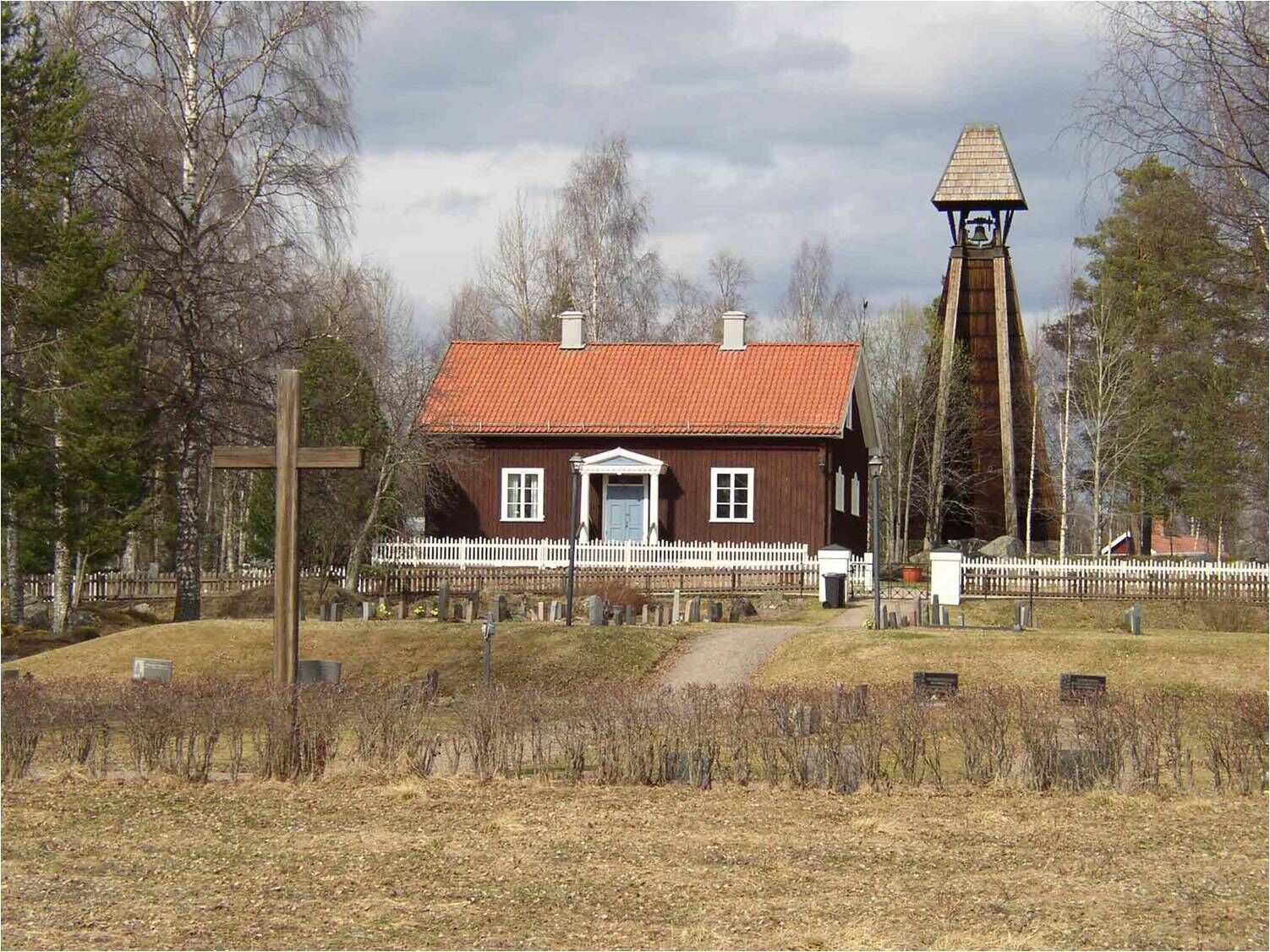

The church in Los was thirty kilometres away, so for a long time the villagers held prayers in one of the farmhouses. Between 1862 and 1869 they built, with their own hands, a combined schoolhouse and prayer house of horizontal logs – today's Fågelsjö chapel. It was thoroughly renovated in 1931 by the builders Ejnar and Elis Lindström, with an interior designed by the artist Gustaf Ankarcrona, and in 1933 the altar received its woven textile by Märta Måås-Fjetterström, 'the lilies of the field'. The churchyard has been in use since 1832 and the bell tower was raised in 1953, paid for by the church sewing circle.
Sawmill, railway and the America house
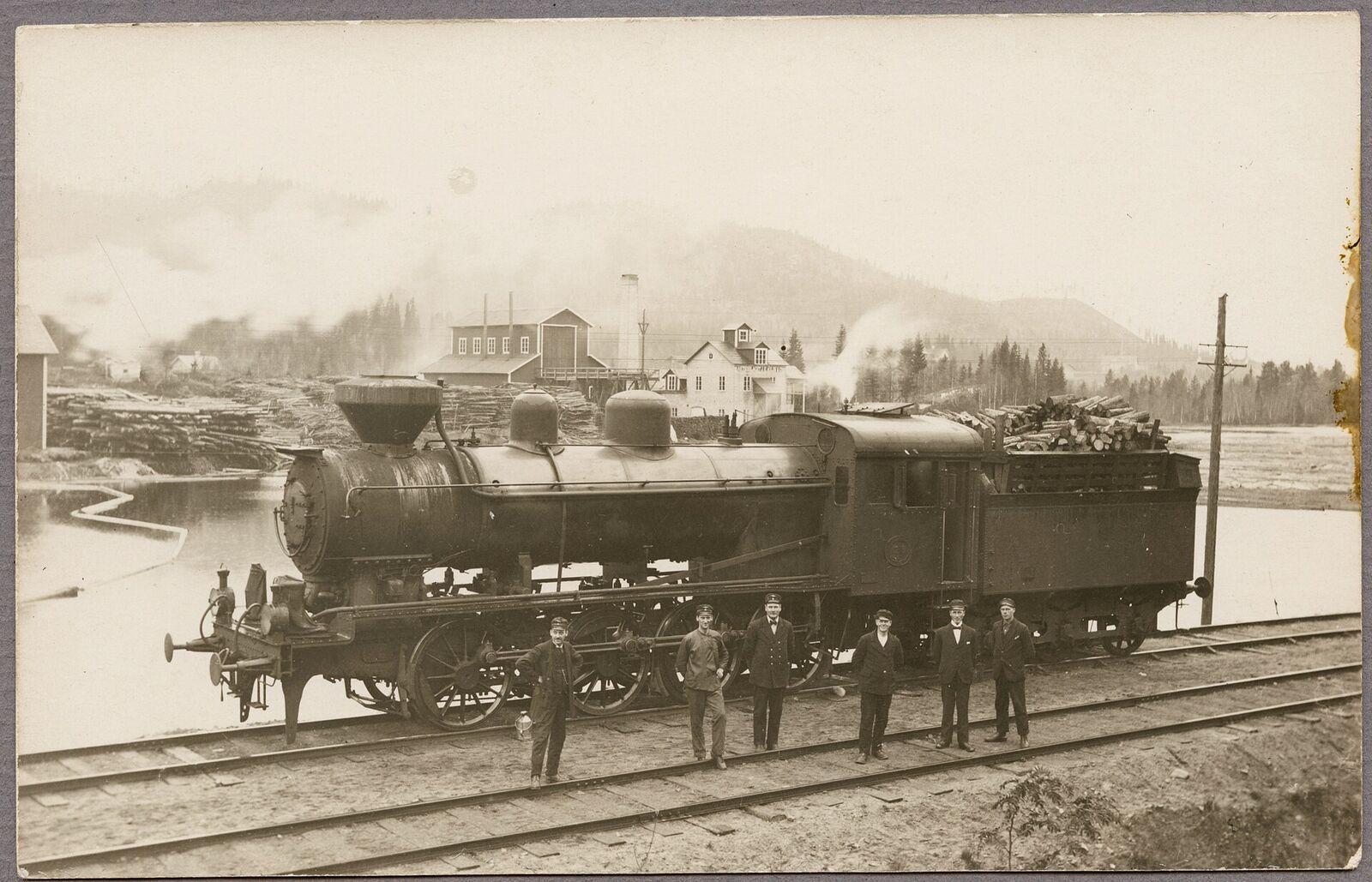

Around the turn of the last century Fågelsjö was a lively village with a sawmill, a furniture factory, a school, a shop and a post office. At Bortom Åa Jonas Olsson's daughter Kristina had married her second cousin Mårten Persson in 1887, at eighteen, a merchant trained in Stockholm, who ran a general store on the farm. In 1910 their new villa was finished – modelled on what relatives in America had described, and therefore called the America house. The couple moved in at Christmas and left the old house untouched.
At the end of the 1920s the Inlandsbanan railway reached the village. The station lies a couple of kilometres from the village centre, by the cluster of houses still known as 'Stationen', and the railway brought both work and connections. The road to Sveg was not built until the late 1940s.
Depopulation and World Heritage
Like the whole Finnmark, Fågelsjö emptied during the second half of the 20th century. The school, the shop and the post office disappeared, and today some twenty people live year round in the village and at Stationen. But what was preserved turned out to be unique: Kristina Olsson bequeathed Bortom Åa to Los municipality in 1943, the farm was listed as a protected building in 2004, and in 2012 it was inscribed on UNESCO's World Heritage List as one of the seven Decorated Farmhouses of Hälsingland. The whole village, as a Forest Finn settlement, is also designated a national interest for cultural heritage. Around ten thousand visitors a year now come to a village of fifteen to twenty inhabitants.
Since the 1920s the Priest's Weekend has been celebrated on the first Sunday of July, with a service in the chapel and the priest rowed across the lake – a tradition that lives on, as do the craft festival, the midnight walks in Hamra and the parties at the community hall.