
Visiting the farm
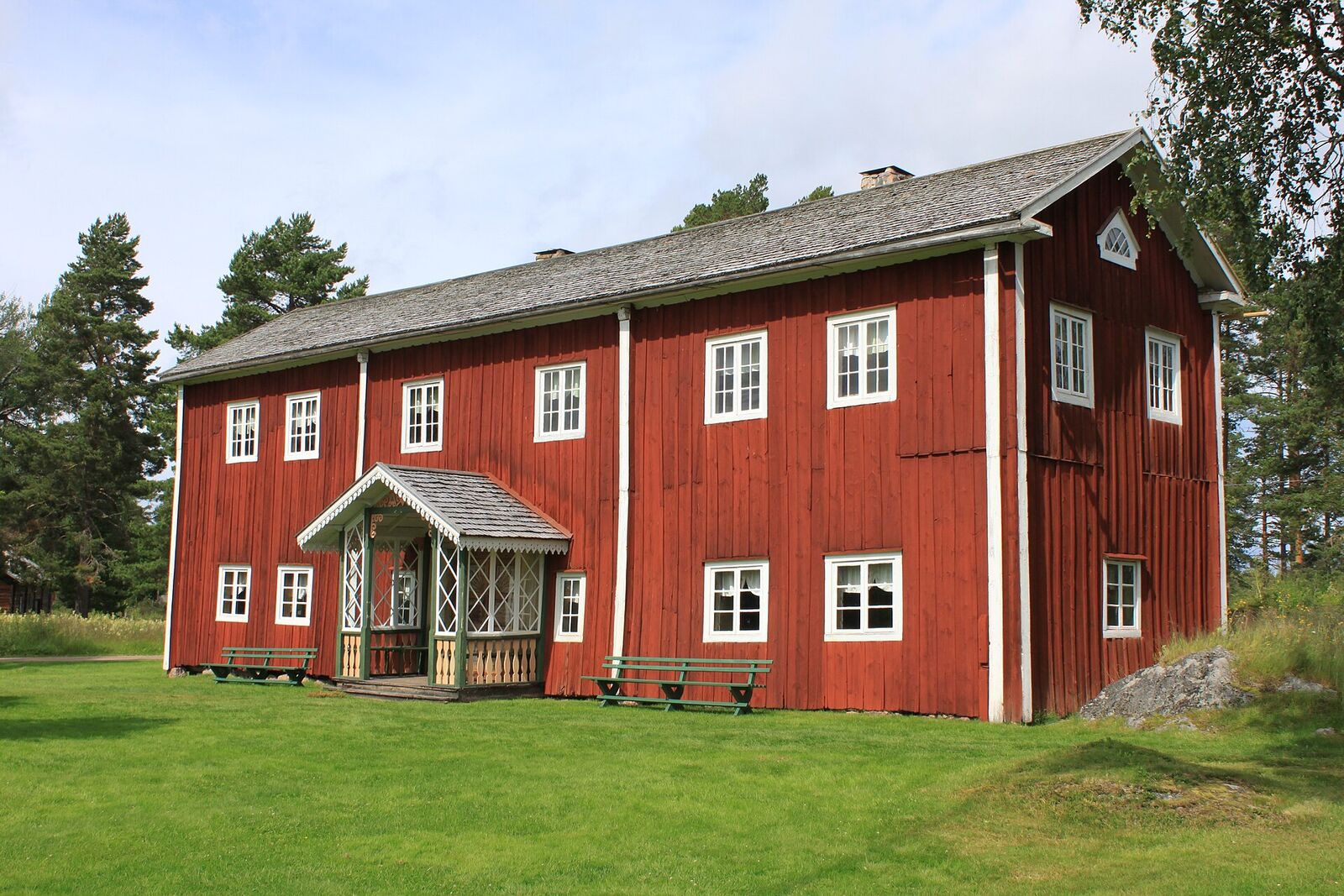
The farm is in the middle of the village at Fågelsjövägen 239 and is run by the Fågelsjö local heritage society on behalf of Ljusdal Municipality. The buildings can only be seen on a guided tour – the guides dress as the maids and farmhands of the farm's heyday – while the yard, the animals, the café and the shop are open all day. Tours are given in Swedish; ask about English when booking.
- Season 2026
- 1 June – 13 September, daily 10–17. Closed on Midsummer's Eve.
- Tours
- At 10, 12, 14 and 16. About one hour.
- Admission
- SEK 160. Children under 15 free. Groups of more than 10: SEK 120 per person.
- Café
- Café Bortom Åa in the America house: coffee, home baking, sandwiches and a light lunch roughly 11–14. Also open a couple of weekends after the season ends in September.
- Booking
- +46 657 300 30, [email protected]. Café +46 76 186 30 03.
- Web
- fagelsjo.nu · Facebook and Instagram: fagelsjogammelgard
- Address
- Fågelsjö Gammelgård Bortom Åa, Fågelsjövägen 239, 827 70 Los, Sweden
A World Heritage site
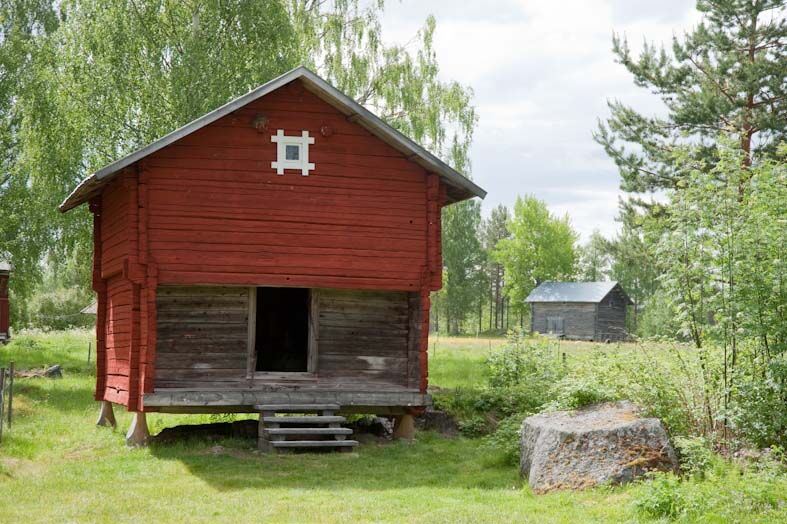

In 2012 UNESCO inscribed seven farms in Hälsingland on the World Heritage List as the Decorated Farmhouses of Hälsingland – Sweden's fifteenth World Heritage site. The farms were chosen because they show how independent farmers in the 19th century had their festive rooms decorated with paintings and joinery of a quality unmatched in peasant culture. Bortom Åa is the northernmost and most remote of the seven, and the only one in a Forest Finn village.
What makes Bortom Åa unique is not only the paintings but the whole: thirteen buildings from the 18th and 19th centuries, complete furnishings, and an archive of diaries, letters and accounts that lets the life of the farm be followed in detail through seven generations of the same family.
The old main house
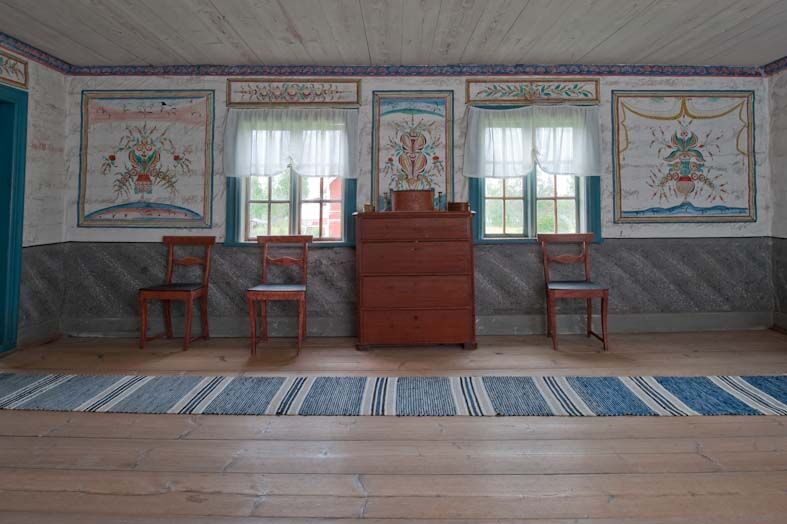

The main house was built around 1816–1819; the names of the couple married at the farm in 1821 are painted on the porch door. In the early 1800s the buildings enclosed the yard on all sides; they have since been moved apart. In the lower hall an unknown artist painted floral motifs and landscapes, and a picture of Crown Prince Karl Johan in his carriage – in a style of its own, typical of neither Hälsingland nor Dalarna painting. In the upper hall, the 'gentleman's room', the Dalecarlian painter Bäck Anders Hansson decorated walls and joinery in 1856 in the intense blue that has become the farm's hallmark.
When Kristina and Mårten moved to the America house in 1910 they left everything behind: clothes and shoes, the rifles on the wall, household goods, an unfinished letter. The guides show how guests were given straight spoons while the servants got bent ones, and why the beds are so short – people slept half sitting up. Upstairs, instead of the roomy sleeping halls usual on Hälsingland farms, there are three small guest chambers with printed wallpaper.
The gun forge and the seven-bolt lock
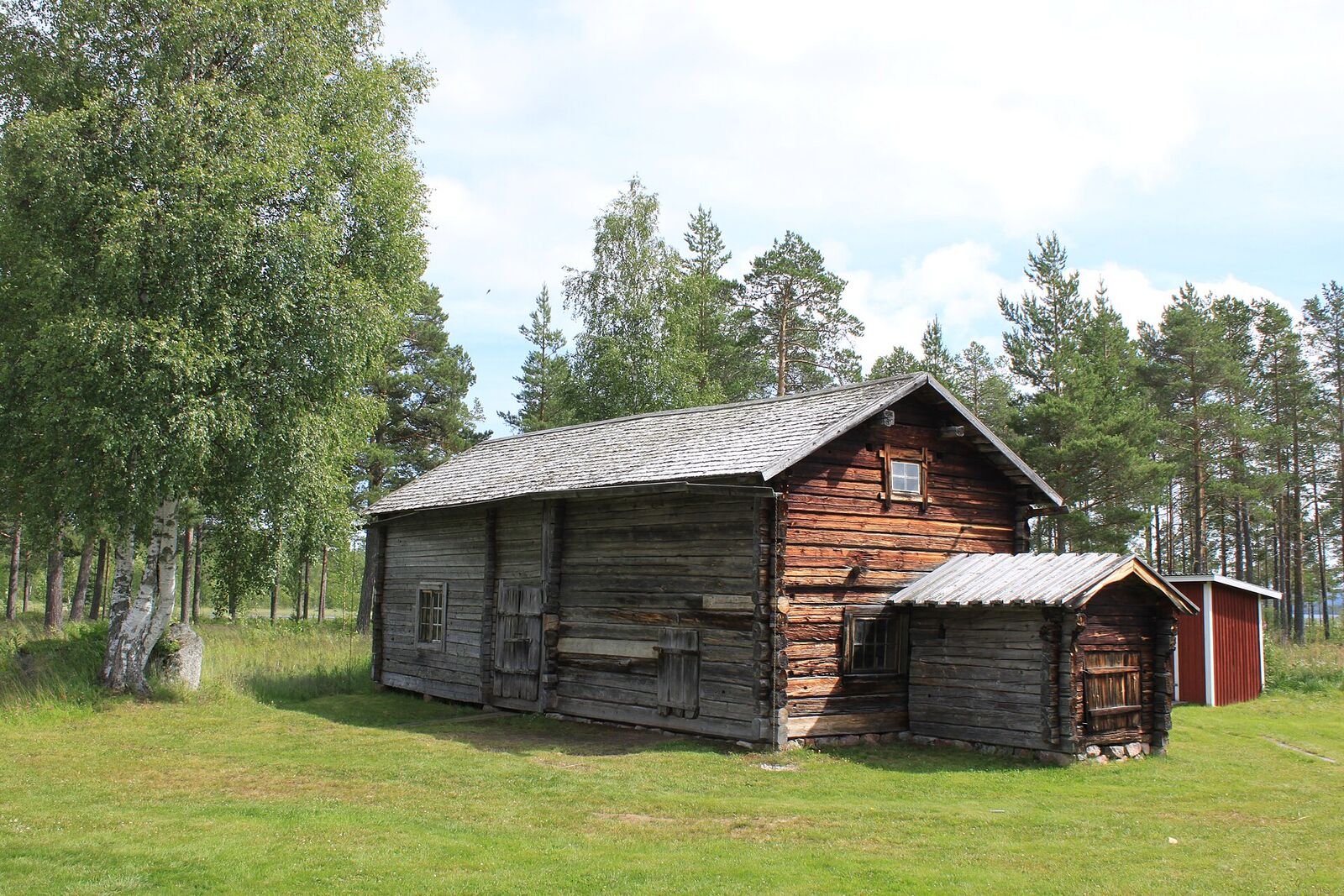

The gun forge from 1785 is the building that made the farm rich. It is fully equipped with hearth, bellows, anvil and tools and is one of the few surviving peasant gun forges in the country. Jonas Olsson, who ran the forge in the mid-1800s, also devised the storehouse's famous lock in 1860: seven bolts that must be released in the right order – reportedly with several keys and ten separate movements. Those who do not know the secret do not get in.
Other buildings around the yard: a storehouse from the 1820s, sheds from 1741, a harness shed, a bakehouse, a farmhands' cottage, a loft storehouse, barns, a sauna and a cowshed from around 1900.
The America house
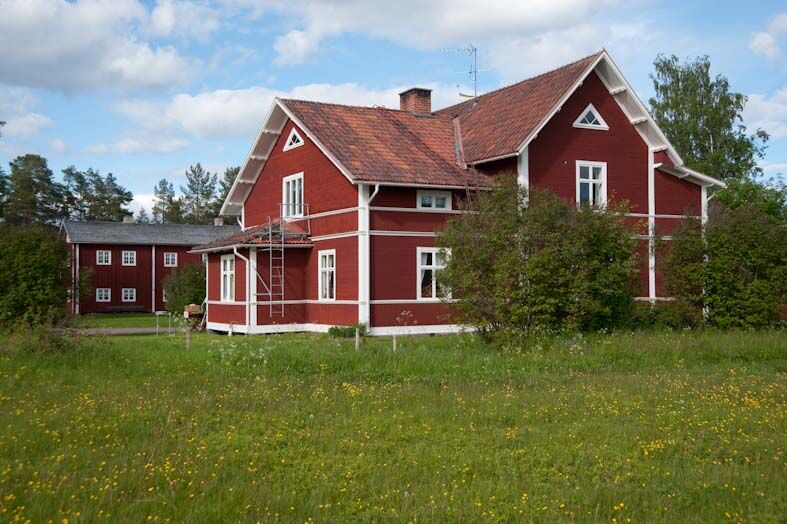

The bright villa from 1910 is said to have been modelled on postcards and letters from relatives who had emigrated to America, and it undeniably looks like a New England house that has landed in the Finnmark. Kristina Olsson and Mårten Persson lived here until their deaths in 1941 and 1943. Childless, they bequeathed the farm to Los municipality, which took over in 1946. Today the America house holds the café and the craft shop.
The Fågelsjö horse
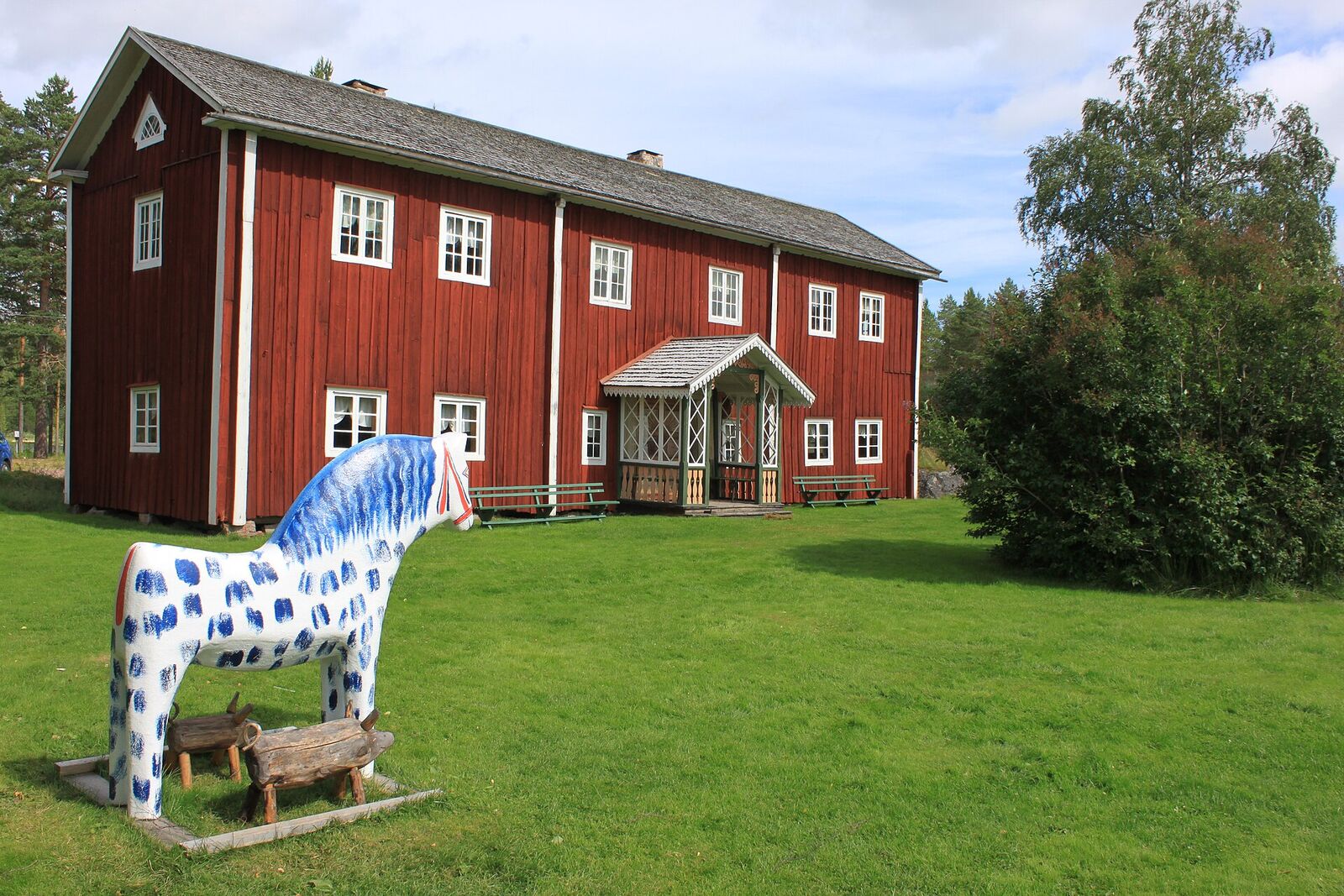

For many years a small blue-painted wooden horse from the 1850s stood in a window of the old house. It has become the symbol of the farm and the village, the model for the large wooden horse in the yard and for the small ones sold in the shop. When a private individual offered SEK 100,000 for the original in 2019, the municipality declined – the horse belongs in Fågelsjö.
Courses and crafts
During the season the farm runs courses in old techniques: plant dyeing, flatbread baking, forging, whittling, knitting, nålbinding – and muzzle-loader making, in the forge where it all began. In mid-July the Craft Festival offers demonstrations, courses and a craft day with motti and meatballs. The courses are run with the adult education association Studieförbundet Vuxenskolan; programme and registration at fagelsjo.nu. The craft shop sells, among other things, the Fågelsjö horse carved in the village and the farm diary of Jonas Olsson, found on the farm and published as a book.
The seven World Heritage farms
Kristofers in Järvsö and Bommars in Letsbo are, like Bortom Åa, in Ljusdal Municipality and can be combined into a World Heritage tour in one long day. More on all seven at Världsarvet Hälsingegårdar and UNESCO.
- Bortom Åa, Fågelsjö – Ljusdal Municipality
- Kristofers, Stene – Järvsö, Ljusdal Municipality
- Gästgivars, Vallsta – Bollnäs Municipality
- Pallars, Långhed – Ovanåker Municipality
- Jon-Lars, Långhed – Ovanåker Municipality
- Bommars, Letsbo – Ljusdal Municipality
- Erik-Anders, Askesta – Söderhamn Municipality